
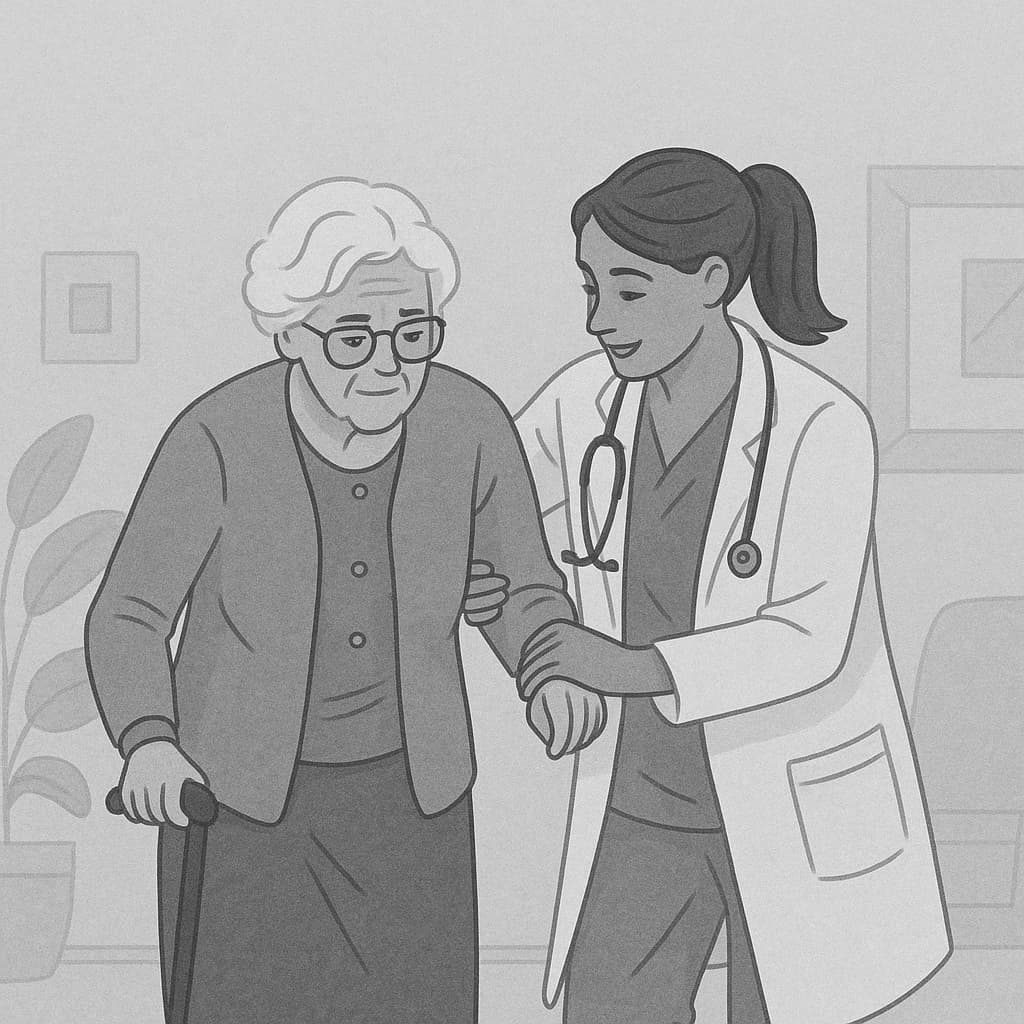

Despite everything I know, teach, and practice, my own mum—who lives with us—still falls. It’s a humbling reminder that even with the best support, falls can and do happen. It doesn’t mean we give up; it means we keep learning, keep adapting, and keep looking at the whole person, not just their checklist of risk factors.
The National Institute for Health and Care Excellence (NICE) has released its updated guideline on preventing falls in older adults and in those aged 50 and over who are at higher risk. The guidance, published on 29th April 2025, focuses on early identification, tailored care, and multidisciplinary support to reduce preventable injuries, hospital admissions, and long-term loss of independence.
updated guideline on preventing falls in older adults and in those aged 50 and over who are at higher risk
Falls: Not Just a “Whoops” Moment
Let’s start with the hard truth. Around a third of people aged 65+ will fall this year. That’s not just garden-variety clumsiness; it’s 210,000 emergency hospital admissions in England alone. If you’re over 80, the odds are even worse—like betting on the weather staying dry at a British barbecue.
But it’s not all doom and gloom. The new NICE guideline zeroes in on early intervention, comprehensive assessments, and joined-up care. And here’s where primary care professionals—and training —can genuinely shift the narrative.
primary care professionals—and training —can genuinely shift the narrative.
What NICE Is Saying
The guidance recommends tailored care plans for anyone over 50 at higher risk, including those who:
- Have fallen recently and live with frailty
- Injured themselves or lost consciousness during a fall
- Needed help getting up afterward
- Have taken more tumbles than your average toddler learning to walk
It’s also big on:
Prevention through strength and balance training (Tai Chi, anyone?), medication reviews, and home safety checks
Where Training Steps In—Without Tripping Over Itself
Here’s the kicker: many of these preventable falls link back to modifiable risk factors. And guess what? You’re already tackling them in your day-to-day care—or could be, with a little extra support.
Our training doesn’t just tick CPD boxes—it’s practical, clinical, and yes, a bit quirky. We cover things like:
- Anticholinergic burden: Because meds that fog the brain or dry out the body are basically banana peels in tablet form.
- B12 deficiency: Subtle signs, big consequences—think “brain fog meets jelly legs.”
- Whole-person care: Managing long-term conditions while spotting the little signs that a patient might be heading for a fall (figuratively and literally).
Non-medical prescribers, GPs, practice nurses, and care coordinators all have a front-row seat to the lives of patients who might be falling through the cracks—often literally. That’s why our sessions are designed to give you the confidence and know-how to intervene early, adjust medications thoughtfully, and see the person, not just the polypharmacy.
The Bottom Line (And Let’s Keep It Upright)
Falls aren’t just accidents—they’re loud, clanging signals of unmet needs. NICE’s update is a timely reminder that the answers lie not only in multidisciplinary coordination but also in skilled, attentive, well-trained primary care teams.
So whether it’s adjusting a prescription, spotting early frailty, or just asking, “Have you had any slips recently?”—your role is vital. And with the right training, you’ll be even better equipped to stop the fall before it starts.
Let’s keep older people upright, independent, and dancing in their kitchens a little longer. That’s a cause we can all get behind.