
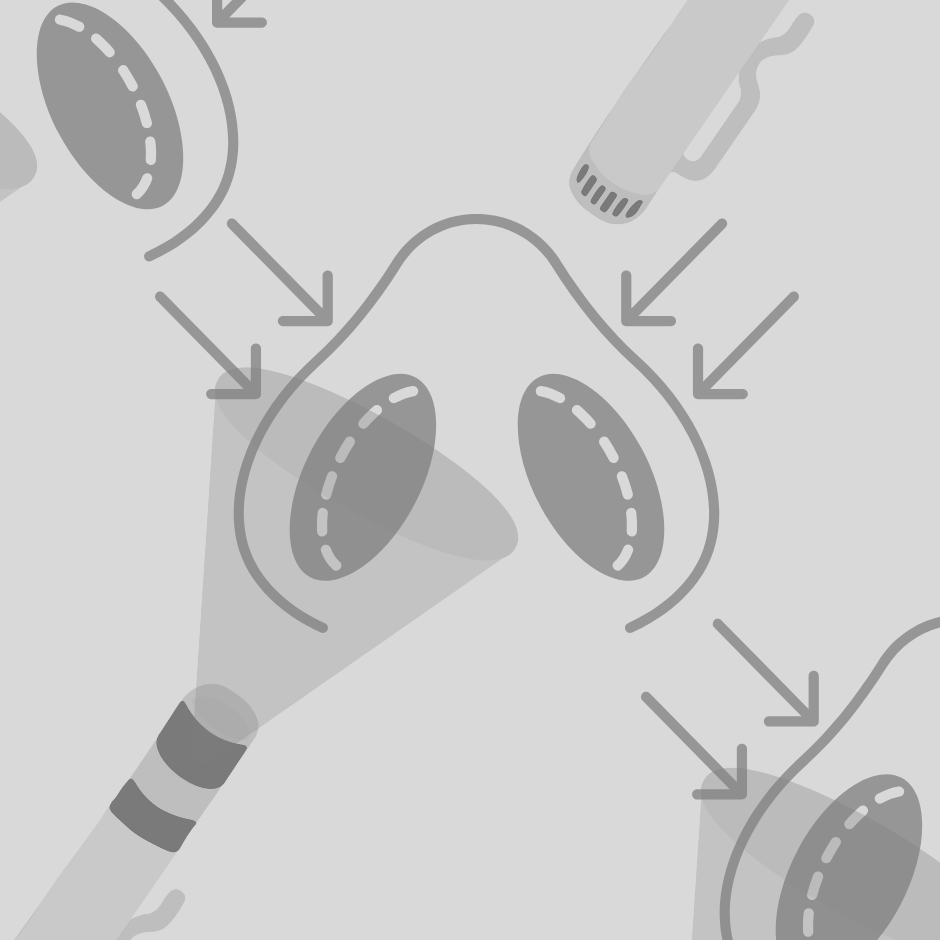

Let’s talk about something that gets wildly overlooked: nostrils. It’s maddening how often clinicians ignore the nose—as if breathing isn’t fundamental.
Yes, those two little caves we often ignore unless they’re actively running like taps. As clinicians, we pride ourselves on thoroughness — we listen, we percuss, we palpate… but how often do we actually shine a light up the nose?
Here’s a case for the humble pen torch.
Courtney from the office walks in, clearly anxious. She’s been feeling like she’s choking at night. No sore throat. No obvious infection. Two clinicians have already told her there’s not much to do. Understandably, she’s frustrated.
I ask if I can take a quick look up her nose.
She agrees.
Torch out. Nostrils lit.
And there it is: both nasal passages red, swollen — possibly with a polyp in one. It took me seconds. No advanced tools, no ENT degree, just a £2 pen torch and curiosity.
I advised her to start a steroid nasal spray, use steam inhalation, and gave her a brief rundown of allergic rhinitis management.
Today, she bounced into the office to thank me: the doctor confirmed exactly the same. She felt heard, reassured — and validated.
So why do we keep skipping the nose?
Looking up the nostrils can help identify:
- Allergic rhinitis (turbinates pale or swollen)
- Infective rhinitis (red, inflamed mucosa)
- Nasal polyps
- Deviated septum
- Foreign bodies (especially in children)
- Chronic sinus issues
- And treatments like intranasal corticosteroids (e.g. fluticasone, mometasone) are backed by strong evidence.
✅ A 2020 Cochrane review found that intranasal corticosteroids significantly improve nasal congestion, rhinorrhoea, sneezing, and itching in allergic rhinitis.
✅ NICE also recommends a trial of intranasal steroids for 2–4 weeks for persistent symptoms.
Yet… we forget to look. So here’s the quirky clinical pearl:
When in doubt — torch it out.
Don’t underestimate the diagnostic power of a glowing pen and a good look up the nostril.
Let’s stop skipping the sniffers and start solving more cases in seconds.