
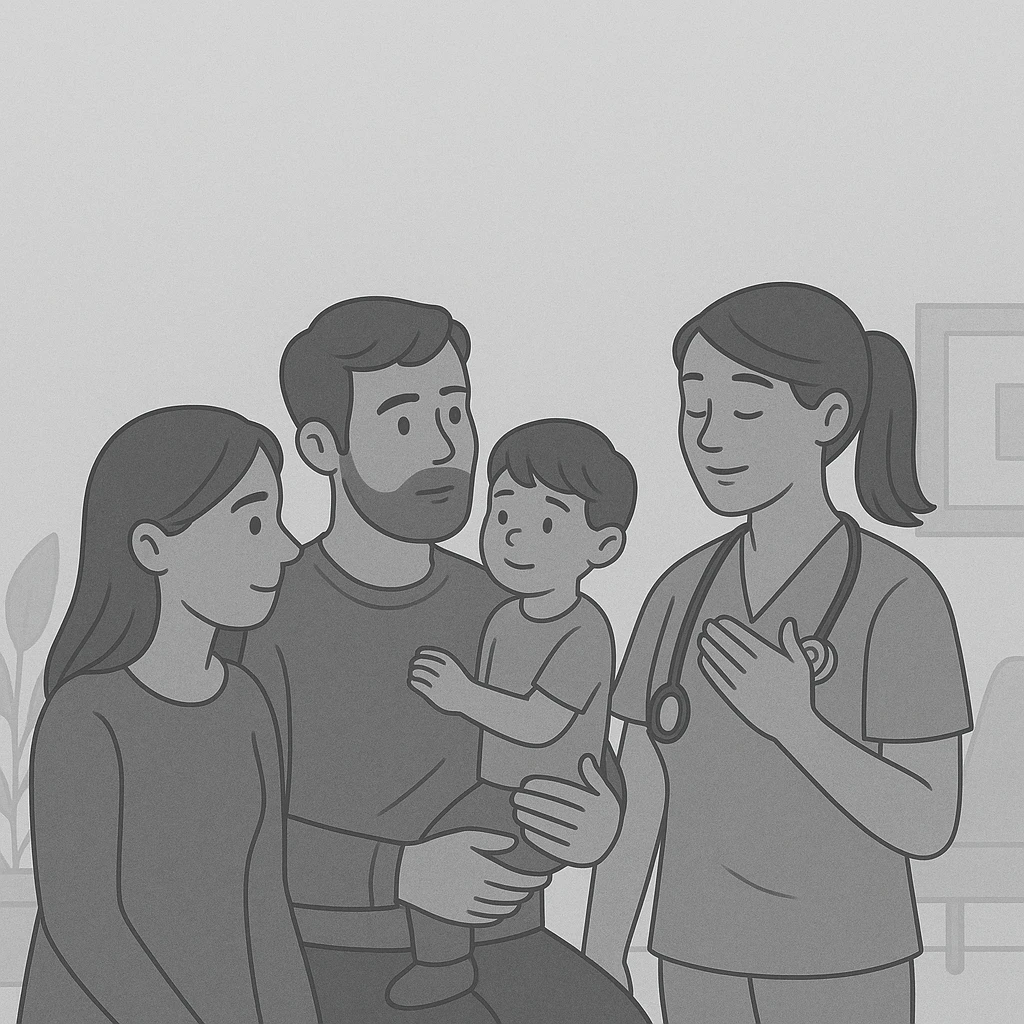

There has been heartbreaking cases in this country where parents’ concerns about their children were not listened to, with some tragically ending in death.
Although the focus of the report was in Australia and was in hospital settings, I couldn’t help but think:
How often might this be happening in primary care here in England?
Over the years, I’ve seen similar stories shared on social media—parents dismissed, symptoms overlooked, and fragmented care failing to connect the dots. As a nurse and educator, this deeply unsettles me.
In our minor illness courses, we always stress to clinicians:
“Parents know best—listen to them.”
But after today, I’ll be saying it louder.
One particular part of the report struck me hard:
If a parent expressed concern, their child was nearly four times more likely to require intensive care—even when vital signs appeared normal.
Their recommendation? “Include parental concern as a vital sign.” That statement couldn’t be more powerful—or more necessary.
Recently in Bristol, a mother whose son was initially told he might have mumps later found he had leukaemia. Her message?
“Trust your gut instinct—no one knows your child like you do. Keep pushing.”
That really hit home.
As clinicians, we often talk about gut instinct—those quiet nudges that tell us something’s not quite right, even when the numbers don’t scream danger. We trust our own instincts.
So why wouldn’t we value a parent’s instinct just as highly?
This isn’t just about listening. It’s about changing the culture of care—one where we respect, document, and act on what parents are telling us. Not as an afterthought, but as part of our core clinical assessment.
Let’s teach this. Let’s practice this. Let’s make parental concern a red flag in its own right.
Because a gut feeling could save a life.
Live Online – Paediatric Presentations: From Minor Ailments to Red Flags – MA Training Enterprise