
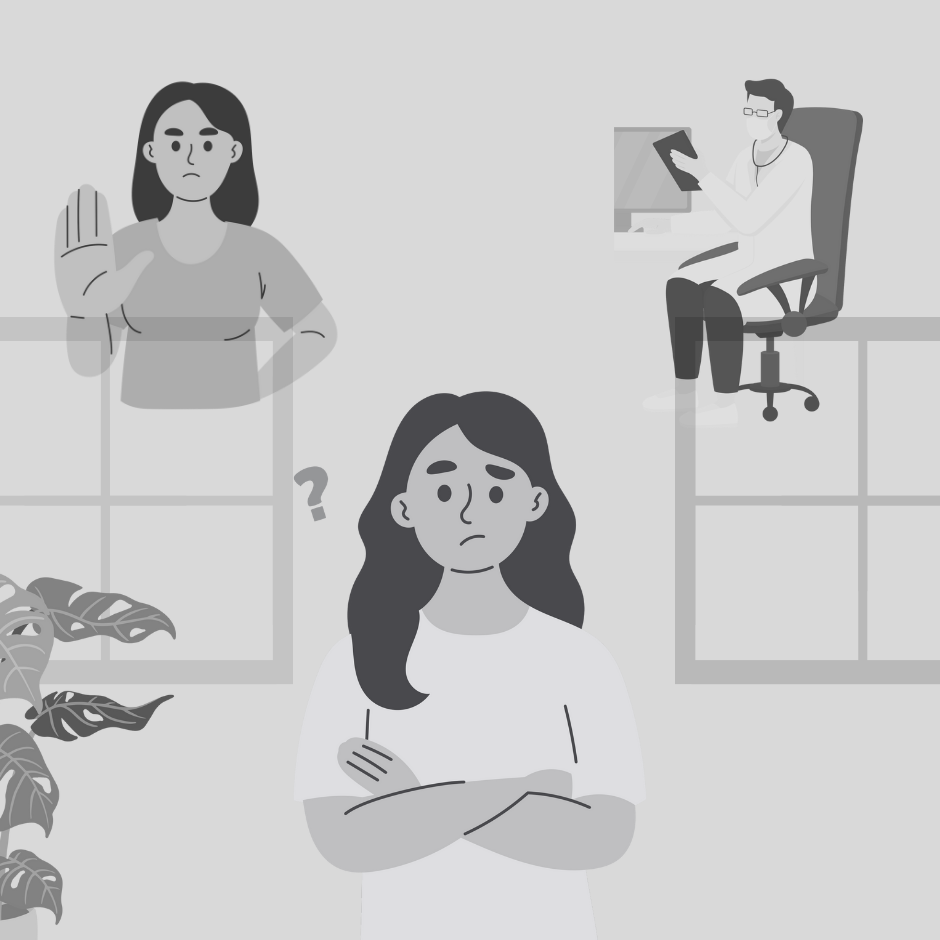

Good medicine is not just about finding the right treatment. It’s about understanding what might stop someone from accepting it.
She was only thirty, but looked far older. Pale and exhausted, she sank into the chair as though it had taken all her strength just to make it to the appointment. Her voice was quiet, almost apologetic, as she told me she’d been bleeding for seventeen days straight. Not heavily, but enough to drain her.
She was tired all the time, her hands tingled with pins and needles, and her mood had sunk lower and lower.
On the surface, it sounded like a routine case of prolonged periods. But when I looked at her blood results from last month, the story became far more serious. Her vitamin B12, folate, and iron levels were all critically low. Left untreated, this kind of deficiency doesn’t just cause fatigue — it can lead to irreversible nerve damage, profound anaemia, and long-term ill health.
The good news was that the treatment was straightforward: a course of B12 injections and iron supplementation. The bad news? She hadn’t taken any of it.
When I gently asked why, she told me two things. First, she was terrified of needles. Second, her mother had told her she didn’t need any medicine at all. She had dutifully handed everything back to the pharmacy.
At that moment, the consultation shifted from a medical puzzle to something far more complex.
At that moment, the consultation shifted from a medical puzzle to something far more complex.
NHS Constitution for England
States patients’ rights to be involved in decisions about their care and to refuse treatment.
Balances autonomy with the responsibility of clinicians to provide clear, evidence-based advice. 
The Dilemma
As health care professionals, we often talk about our duty to “do no harm” and to act in our patients’ best interests. But what happens when a patient, fully aware of the risks, chooses not to follow through with treatment? And what happens when that choice is shaped not just by personal fear, but by the influence of family or cultural beliefs?
Autonomy — the right to make your own decisions about your health — is a cornerstone of medical ethics. But autonomy becomes complicated when it’s entangled with fear, misinformation, or pressure from loved ones. Was this young woman truly making her own choice, or was she simply echoing her mother’s voice?
The Mental Capacity Act 2005 (if decision-making ability is in doubt)
Establishes that adults are assumed to have capacity unless proven otherwise.
Decisions must be respected if made with capacity, even if they seem unwise.
My Approach
Instead of diving straight into persuasion, I started with her fear. We talked about what injections meant to her, what images came to mind, what frightened her most. Sometimes naming the fear can take away part of its power.
Then I explained what would happen if the deficiencies weren’t corrected — not in jargon, but in terms she could connect to: her energy worsening, her mood sinking further, the pins and needles potentially becoming permanent. I reassured her that the injections were safe, quick, and a standard treatment used worldwide.
Most importantly, I tried to make sure the decision was hers, not her mother’s.
NHS Constitution for England States patients’ rights to be involved in decisions about their care and to refuse treatment. Balances autonomy with the responsibility of clinicians to provide clear, evidence-based advice.
The Wider Picture
This consultation stayed with me because it reminded me how health decisions are rarely made in isolation. Culture, family, and fear all weave themselves into the medical story. For some, a parent’s opinion carries as much weight as any prescription. For others, fear of needles is not a trivial barrier, but a genuine block to treatment.
As a clinician, it would have been easy to focus only on the lab results and the obvious treatment plan. But the real work was in the conversation — in bridging the gap between science and the human experience of illness.
Reflection
Did she agree to start treatment that day? That part of the story is hers to tell. What matters to me is what I learned: that good medicine is not just about knowing the right answer, but about understanding what might stop someone from accepting it.
It left me wondering — how many people silently live with treatable conditions, not because they don’t want to get better, but because fear or family belief holds them back?
👉 What would you do if the treatment that could save your health was the very thing you feared the most?